Generate
A microturbine provides on-site electrical power. Fuel qualification belongs to the turbine OEM and may include natural gas, biogas, ethanol, diesel, biofuels or blends.
On-site turbine power and absorption cooling can draw value from the same exhaust stream.
ACTE contributes at more than one point: CPT recuperation inside the turbine, followed by GAP heat recovery downstream to supply an absorption chiller.

Blue indicates cooler streams; orange and red indicate progressively hotter streams. Colours are qualitative, not a temperature scale shared across circuits. Fuel is grey and electricity is gold.
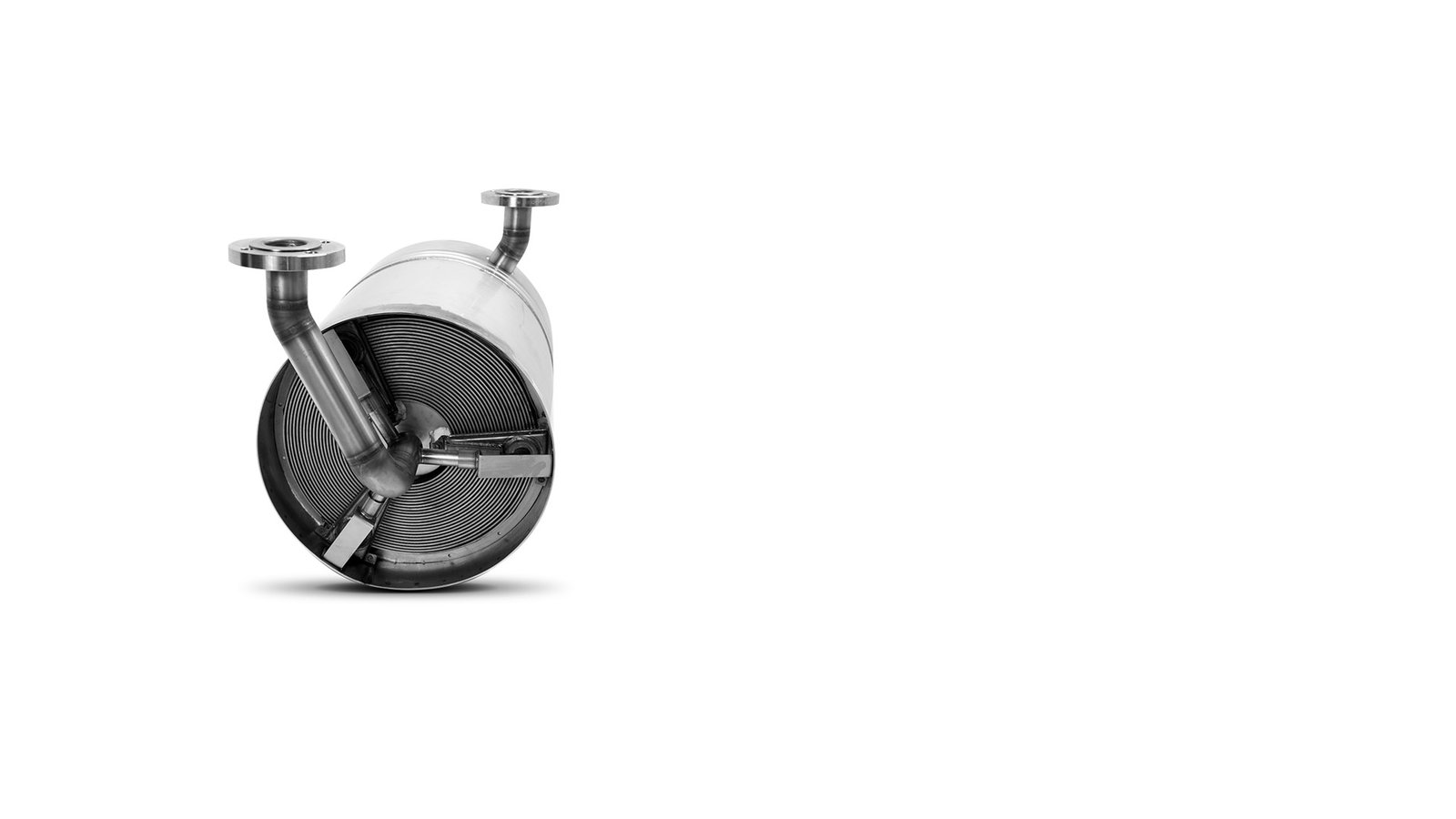
The CPT recuperator preheats combustion air. The separate GAP unit sits downstream in the exhaust duct, recovering remaining useful heat for an absorption chiller.
ACTE supplies the recuperator and the downstream heat exchanger. The chiller, water loop and datacenter cooling system remain separate equipment, and their performance must be evaluated from the actual exhaust conditions and chiller coefficient of performance.
A microturbine provides on-site electrical power. Fuel qualification belongs to the turbine OEM and may include natural gas, biogas, ethanol, diesel, biofuels or blends.
A GAP unit takes useful grade from the turbine package’s downstream exhaust and transfers it into a hot-water circuit.
The recovered heat can drive an absorption chiller, turning part of the exhaust stream’s remaining energy into cooling for the racks.
Beyond turbine exhaust recovery, a GAP heat exchanger could also be integrated within the datacenter’s cooling system. This is an additional application to explore with ACTE, separate from the absorption-cooling arrangement shown in the diagram.
We assess the heat-transfer duty, working fluids, temperatures, flow rates and allowable pressure drop with your cooling-system team to determine the appropriate configuration. GAP provides heat exchange; it does not replace the complete cooling system.
Discuss your cooling application →A datacenter generating set may be tested, exercised and called on repeatedly. Start-up creates the steepest thermal gradients in a recuperator, so the way its plates accommodate expansion matters. ACTE’s curved annular geometry is designed to deform predictably and repeatably as the core heats and cools.
Every project starts with the electrical profile, exhaust mass flow and temperature at the GAP inlet—not the turbine flange—plus the chiller’s own operating data.
Send us your exhaust conditions →