Heat recovery from waste heat.
Everything leaving the stack is energy already paid for. Where you see smoke, we see money blowing away.
Put a GAP in your exhaust duct and put that energy back to work—recovering useful heat for hot water, thermal oil or steam, and turning wasted heat into savings.
Modular heat recovery, sized for your process.
The models shown here are a selection, not the limits of the GAP range. ACTE offers other off-the-shelf products, combinations in series or parallel, and custom-sized equipment.
The gap between doublets can also be selected for the gas stream: narrower for clean turbine exhaust and more surface, wider where process fumes carry particles and fouling must be managed.
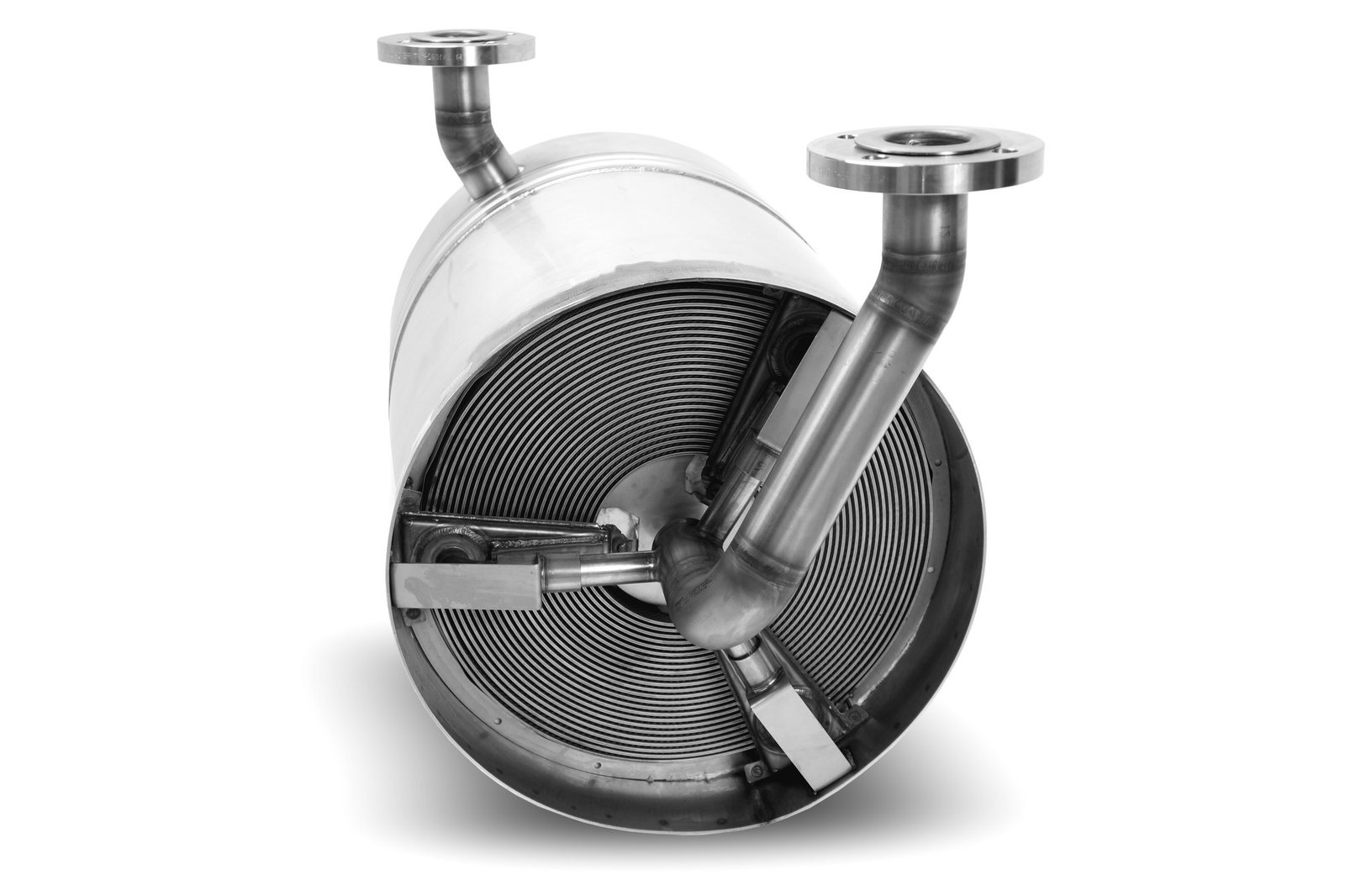
Compact enough to live in the duct already there.
A GAP is designed to be introduced directly into the stack rather than requiring a separate heat-exchange plant. Its stainless, fully welded exchange surface can be configured for gas-to-compressed-air, gas-to-liquid or liquid-to-liquid duties, including phase change.
Gas-side pressure drop, secondary-fluid conditions, access and connections are all sized to the installation. The useful starting point is the real exhaust temperature, flow and available envelope.
Discuss a waste-heat duty →Inside the heat-recovery unit.
Turn exhaust heat into a useful process resource. GAP combines low-pressure-drop passages, counter-flow heat exchange and fluid options matched to your installation.
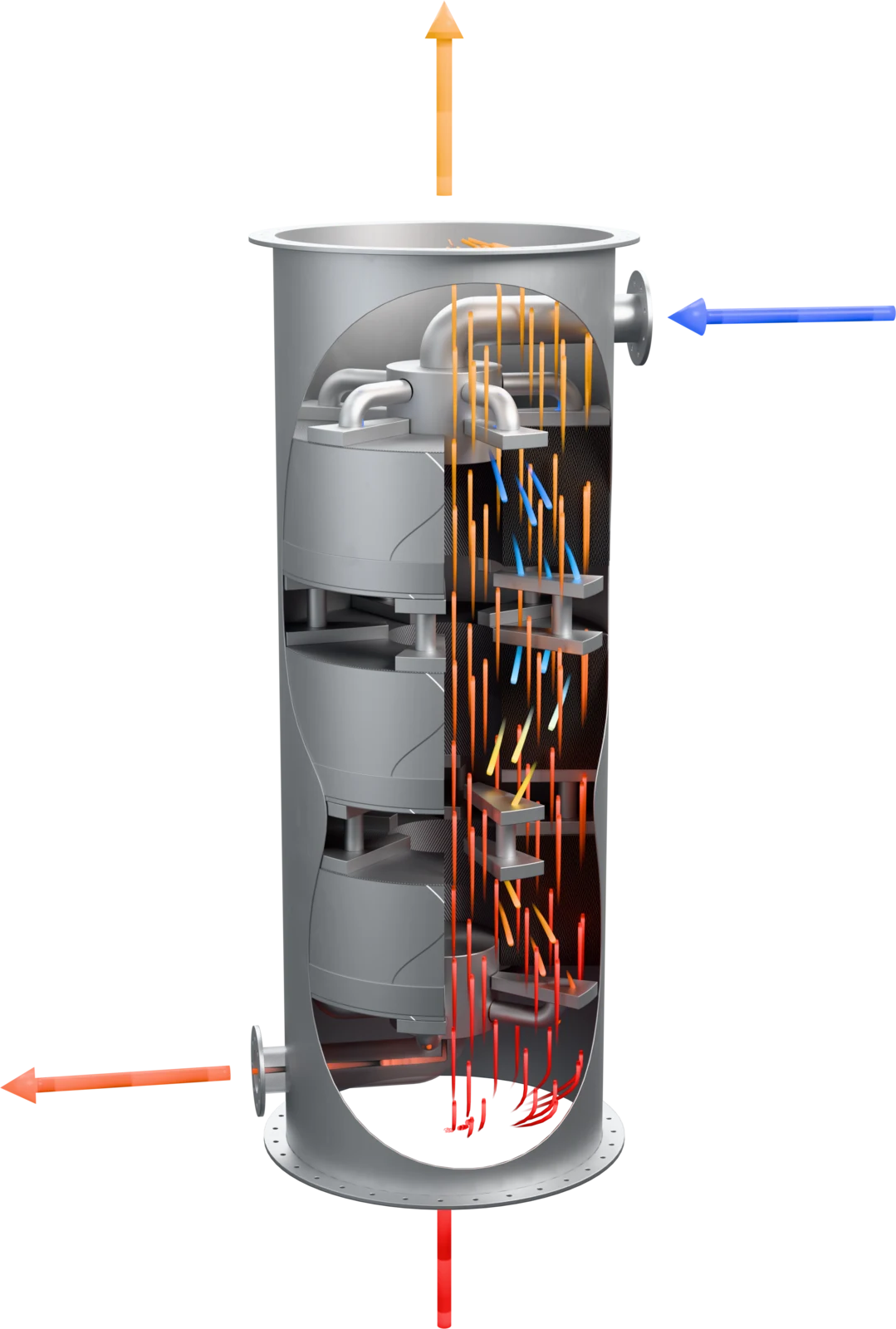
GAP can integrate directly into an exhaust duct or stack, recovering useful heat without a separate heat-exchange plant. The unit is sized around your exhaust flow, available space and heat demand.
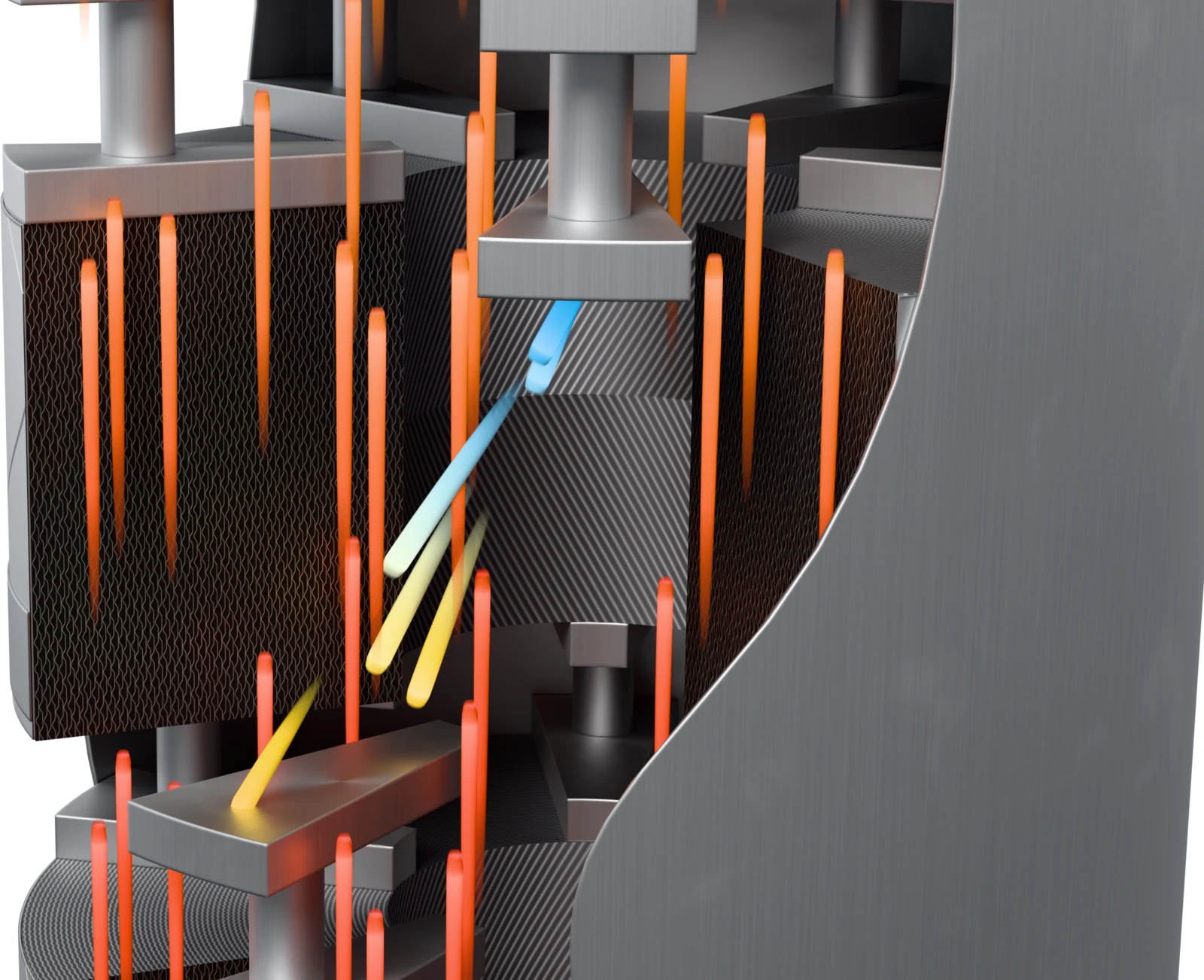
The gap between sheets helps keep gas-side pressure drop low, while ACTE’s 100% counter-flow geometry maintains the temperature difference that drives effective heat transfer. Sheet spacing is selected for the gas stream and fouling conditions.
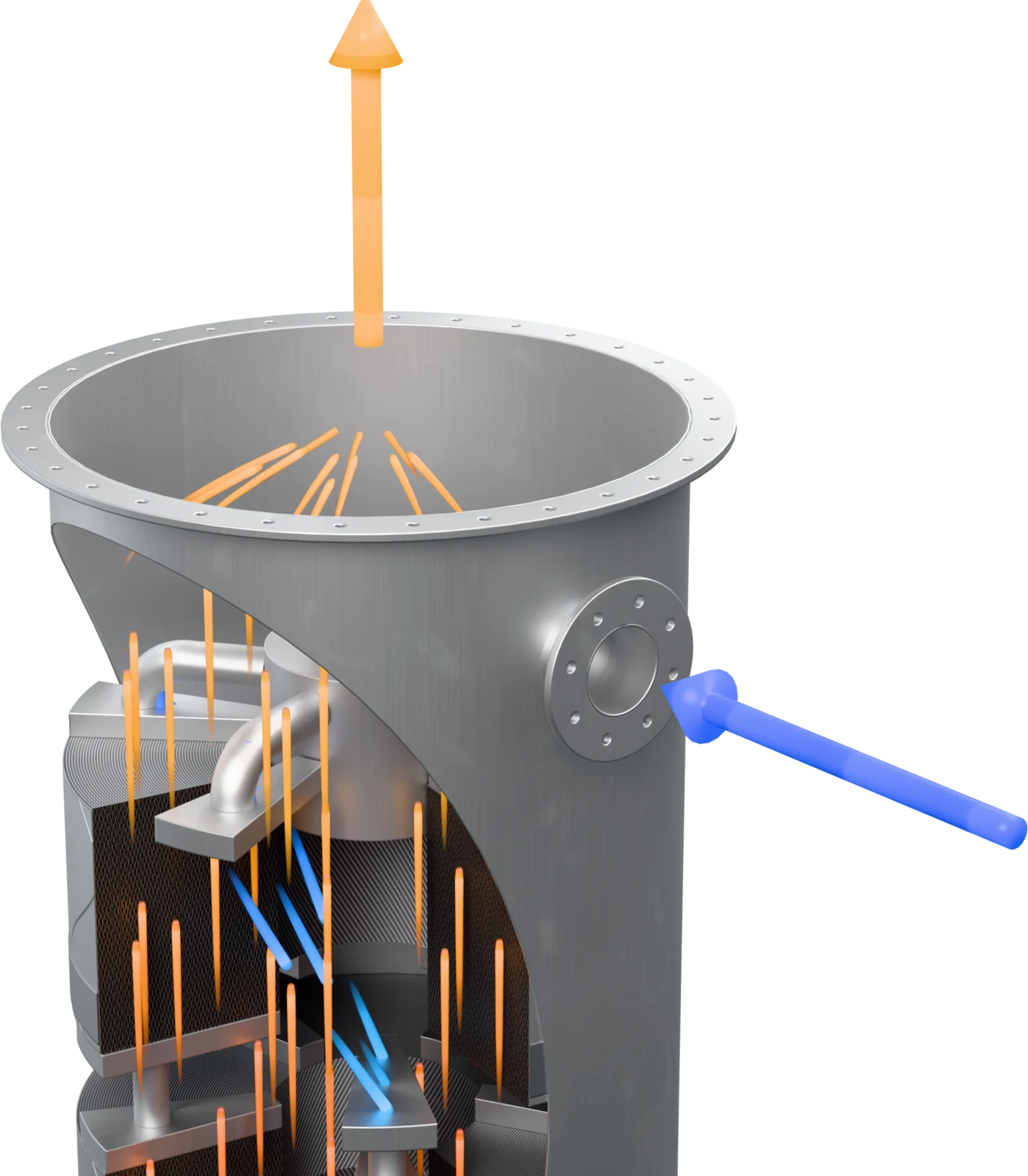
GAP can be adapted to transfer recovered heat to air, water or thermal oil. The exchanger configuration and connections are selected for your fluid, operating conditions and process requirements.
Select any view to inspect the full-size image in a new tab. Illustrative cutaways; the final configuration is selected for your application.
Off-the-shelf, combined or custom-sized.
Off-the-shelf: GAP 30, GAP 50 and GAP 65 are examples, documented as GAP 30-3-2, GAP 50-3-3 and GAP 65-4-5. Other off-the-shelf products are available beyond these datasheets.
Series or parallel: combine products to suit the process. ACTE selects the arrangement around exhaust flow, useful heat demand and allowable pressure drop.
Custom-sized: ACTE also designs and manufactures equipment for the dimensions and operating conditions of your installation.
Find the right GAP configuration →